

 Close
Close


Courage over Cancer Filtered Blog

Children’s stories bring purpose to Hyundai’s Hope on Wheels investment in pediatric cancer research
Two young cancer survivors shared their stories as Hyundai Hope on Wheels awarded $500,000 to support pediatric cancer treatment and survivorship research at UT Health San Antonio.
Read more
Pediatric bone cancer research offers new therapeutic opportunities for osteosarcoma
By Panneerdoss Subbarayalu, PhD This article was first published in the September 2026 issue of the Bexar County Medical Society’s San Antonio Medicine magazine. Osteosarcoma is an aggressive cancer that grows quickly, spreads early to the lungs, and has a remarkable ability to resist treatment. It is the most common primary bone cancer in children […]
Read more
UT Health San Antonio names NIH expert inaugural director of stem cell transplant and cellular therapy program
UT Health San Antonio, the academic health center and health system of The University of Texas at San Antonio (UT San Antonio), has named nationally recognized blood cancer and cellular therapy expert Georg Aue, MD, PhD, MBA, the director of the Stem Cell Transplant and Cellular Therapy Program at the Mays Cancer Center, the only National […]
Read more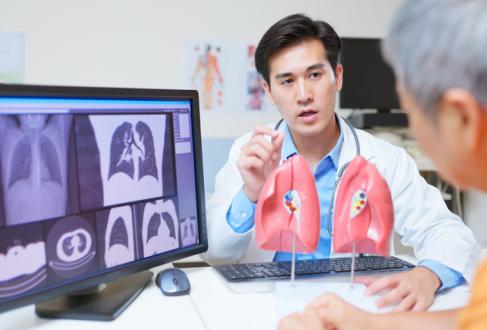
Clearing the air on the lung cancer risks we often ignore
One of the biggest misconceptions about lung cancer is that it only affects people who smoke.
Read more
The ultimate tune-up: Why staying ahead of your health is the smartest move for your family
When we ask men in our community what matters most to them, they rarely mention medical charts or numbers. Instead, they talk about family.
Read more
Researchers uncover potential strategy for safer cancer treatments
Scientists at The University of Texas at San Antonio discovered a potential path to maintaining the cancer-fighting benefits of one type of immunotherapy while limiting harmful organ damage, providing new hope for this promising treatment.
Read more